
After more than five weeks of conflict in the Middle East and as a brittle ceasefire remains under strain, one thing is indisputable: President Trump did not get the short, decisive war that he wanted. It was allegedly a clandestine White House briefing by Prime Minister Benjamin Netanyahu – where Israel’s leader claimed that regime change would be swift, and Iran would not block the Strait of Hormuz – that convinced Trump to go to war.
If the Trump administration were indeed duped by Netanyahu, they have no one but themselves to blame. General Dan Caine, chairman of the joint chiefs of staff, described the plan as “standard operating procedure for the Israelis. They oversell, and their plans are not always well-developed.” This warning went unheeded, despite the fact that it is evident in all of Israel’s recent campaigns. Hamas retains significant power over Gaza’s territory and population, Hezbollah is still a coherent fighting force, whilst Iran’s regime remains in power, Netanyahu’s repeated advocacy of “total victory” and regime change on each of these fronts notwithstanding.
But what if this significant discrepancy between rhetoric and outcomes is by design? Before the 7 October attacks, Israel used its qualitative military edge to “mow the grass”; deterring and degrading any threats through disproportionate military force. This required little consideration for the “day after”, given that all Israel wanted was to revert to the pre-conflict status quo. After October 7, how Israel fights wars looks remarkably similar. Its campaign to restore deterrence has expanded geographically and led it face a greater diversity of foes. But it never stopped mowing the grass. It did not put forward a coherent strategy for regime change on any front, even whilst its leaders repeatedly claimed that they were pursuing transformative goals. This is not just, as General Caine argued, a case of “overselling.” Instead, it increasingly appears at best a systemic failure to meet its transformative goals or at worst a deliberate obfuscation that locks the Middle East into an expanding forever war.
Mowing the grass gained prominence as a term after the “Second Lebanon War” in 2006. Israel’s performance in that war at first appeared lacklustre; its targeting of state infrastructure throughout Lebanon and killing of over 1,100 civilians attracted international censure yet failed to achieve its stated goal of destroying Hezbollah. But the lack of Hezbollah attacks in subsequent years led Israeli officials to claim that they had successfully deterred the group. This is why – when Hamas took over the Gaza Strip in 2007 – Israel opted to contain the group rather than pursue regime change. The result was several rounds of bloody conflict. But until this paradigm came crashing down on 7 October 2023, Israel consistently achieved its intended strategic effect of forcing a return to the status quo.

To achieve this effect, Israel repeatedly subjected Lebanon and Gaza to its chosen method for forcing compliance: disproportionate military retaliation against both hostile threats and civilian infrastructure. This sought to induce deterrence through punishment and to cross a threshold of chaos that would force a ceasefire sooner rather than later. This is why the oft-repeated claims that Israel’s response to any threat is proportionate should be treated with scepticism. The added twist here is that Iran employed the same tactics and to induce the same outcomes in its recent attacks on the Gulf states’ civilian infrastructure.
For Israel, mowing the grass was founded on a dire pessimism about its own inability to induce political change. In Iraq, Afghanistan and elsewhere, western militaries tried to defeat insurgents by winning over “hearts and minds”. Because Arab hostility to its existence is apparently implacable, Israel did not follow suit; there was also no point pursuing a political solution beyond maintaining the status quo. Whilst this sounds nihilistic, it delivered the goods. Whereas western armies tied their own hands behind their backs in order to avoid alienating the local population, Israel could unleash its qualitative military edge. Unlike western population-centric counterinsurgency efforts – which failed – mowing the grass did not rely on intangible metrics of success and progress. All it needed to do was restore order.
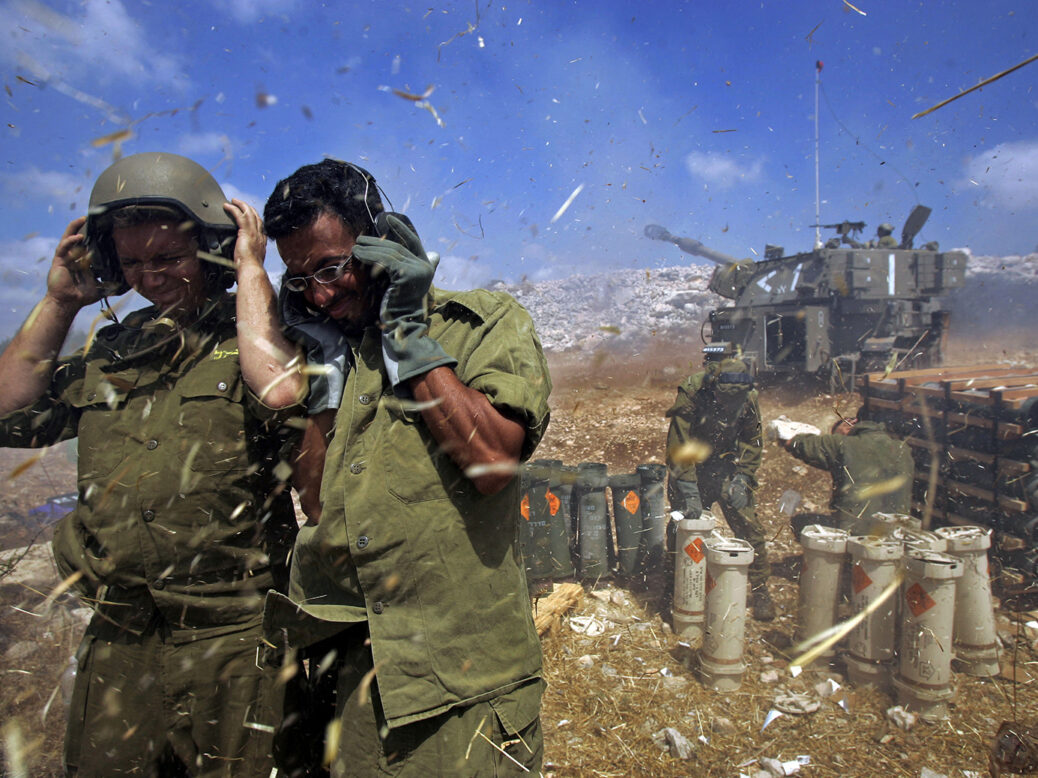
7 October exposed the limits of this strategy. Shortly after, the author of an influential paper explaining the strategic logic behind mowing the grass argued that Israel should now abandon it in order to restore deterrence. Initially, Israel seemed the heed this call. It abandoned its reliance on air power to degrade any emergent threats. Instead, it leant on its substantial pool of civilian reservists on an unprecedented scale, keeping them away from their homes, jobs and families for months on end. Rather than seeking to secure its recognized borders as it had before the war (the West Bank being an exception), it deployed hundreds of thousands of its troops to prolonged ground invasions and occupations of Syria, Lebanon and Gaza. In the months and years after October 7, Netanyahu was consistent in delineating Israel’s new goals: it would no longer manage perceived threats and would instead seek to eliminate them entirely.
In retrospect, however, Israel did change the scale of how frequently and intensely it mowed the grass, removing many of the pre-war constraints on its uses of force. But it did not abandon this long-held approach to warfighting. Given the unprecedented loss of life on October 7, Israel attempted to set a new threshold to achieve disproportionate retaliation and deterrence through punishment. And that is exactly what it did, crossing previously unthinkable red lines in Gaza, Syria, Qatar and now Iran.
Whilst escalating their use of violence, Israel’s leaders never articulated how they would arrive at a “day after” on any front. In Gaza, commentators repeatedly warned that Israel’s refusal to consider or allow a political alternative to Hamas would mean the group could not be destroyed or replaced. But Israel adamantly refused to listen. The result was an endless game of whac-a-mole, where Israel’s military would fight and apparently defeat Hamas cells only for the group to reappear amongst the civilian population when the troops left. A strategy that genuinely sought to achieve “total victory” would require building a viable political alternative and a plan for governance. Israel consistently avoided both. In that sense, its war aims were maximalist in rhetoric but minimalist (albeit with brutal tactics) in practice.
This is even more apparent in contemporary Gaza and Lebanon. Israel now controls over 50 per cent of Gaza and has also killed over 730 Gazans since the November 2025 ceasefire. Conversely, it has allowed Hamas to retain control over the remainder of Gaza, which constitutes less than 50 per cent of the territory but contains over 90 per cent of its inhabitants. It is using the same playbook in Lebanon. During the recent war with Iran, it was Hezbollah that broke the ceasefire in Lebanon. But for months beforehand, Israel launched hundreds of airstrikes. At the time of writing, the ceasefire has been restored. Nevertheless, Israel and Hezbollah continue to exchange fire and over one million Lebanese remain prohibited from returning to their homes in the country’s south. As in Gaza, a ‘ceasefire’ is less an end to the violence and more a toning down to a sustainable threshold. Concurrently, Israel is extending its control over both territories whilst expelling civilians elsewhere.
Israel’s strikes on Iran have taken mowing the grass to a new level. What had once been a doctrine for containing non-state actors was now extended to a sovereign state, collapsing the distinction between limited conflict management and interstate war. It was Iran that first attacked Israel, in April and October 2024. This was a miscalculation: the lacklustre strikes convinced Israelis that Iran was a paper tiger. It also opened up a new paradigm of state-on-state warfare. Israel did not waste the opportunity and launched attacks of its own, leading to the “12-day war” of June 2025. Subsequently, Netanyahu claimed victory and asserted that Iran’s conventional and nonconventional capabilities has been severely degraded. This sat awkwardly with his decision to launch a more extensive campaign in February 2026. Once more, the gap between Israel’s tactics and Netanyahu’s bombast was significant.
If you take Netanyahu’s rhetoric at face value, none of this makes sense. It also suggests that Israel has indeed failed to achieve its transformative regional goals. But when seen through the prism of mowing the grass, Israel’s actions are surprisingly consistent, albeit on a larger scale and more destructive than ever before. Israel is using a time-tested doctrine, which was supposed to avert prolonged conflict and to bring order to chaos, for the exact opposite goals.
This is bad news for not just Israel’s neighbours but for the entire region. It locks the Middle East into a feedback loop of indefinite forever wars with no clear “day after”. It legitimises Iranian proxies like Hezbollah as “resistance” groups against Israel. Israelis will pay a high price. Those who buy into Netanyahu’s rhetoric will be disappointed: mowing the grass can degrade Israel’s foes, but it will not replace them. This gap between Netanyahu’s claims and Israel’s doctrine has already overstretched the country’s military, costing taxpayers well over $200bn to finance, with looming tax increases and spending cuts.
Worse still, it will not end if Netanyahu loses Israel’s upcoming elections in October 2026. Naftali Bennett, Netanyahu’s main challenger, once claimed that “in our neighbourhood, anyone who does not mow the lawn, the lawn mows him.” Mowing the grass predated Netanyahu. Given that Israel has not abandoned it after 7 October, it will likely outlast him.
[Further reading: The Iran war is far from over]
Content from our partners



Related


Join the debate
Subscribe here to comment